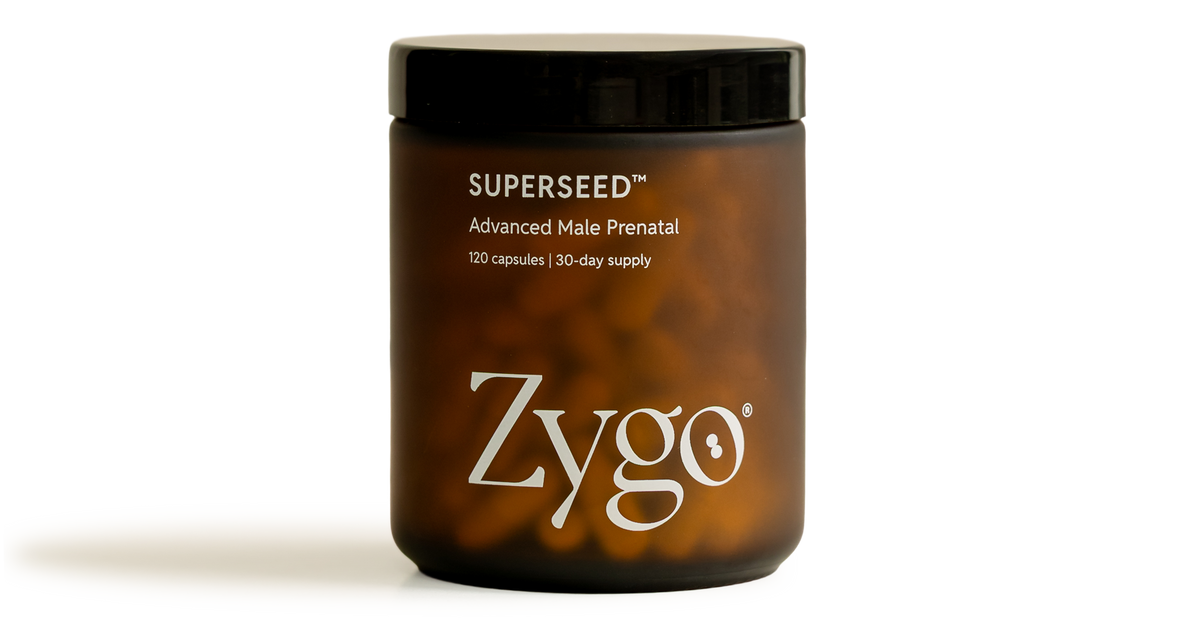
When it comes to male fertility, most conversations stop at sperm count. But count is only one piece of a much bigger picture.
What researchers and fertility specialists increasingly focus on is sperm quality - the motility, morphology, and DNA integrity that determine whether conception is actually possible. And that's where the combination of Acetyl L-Carnitine (ALCAR) and L-Carnitine (LC) has become one of the most compelling stories in male fertility science.
It's also why Zygo uses both, not one or the other.
What is L-Carnitine?
L-Carnitine is a naturally occurring compound synthesised in the body from the amino acids lysine and methionine. Its primary role is one of the most important in cellular biology: transporting long-chain fatty acids into the mitochondria, where they're converted into usable energy (ATP).
In the context of male fertility, this matters enormously. The epididymis, where sperm mature and develop motility, contains one of the highest concentrations of L-Carnitine in the entire body. This isn't coincidental. Sperm are entirely dependent on mitochondrial energy production to power the flagellar movement that drives them forward.
Without adequate L-Carnitine, sperm can be present in high numbers but effectively immobile, unable to complete the journey to fertilise an egg.
 What the Research Shows
Multiple clinical studies have demonstrated that L-Carnitine supplementation can significantly improve sperm motility, particularly in men with asthenozoospermia (low motility). A landmark study published in Fertility and Sterility found meaningful improvements in both total and forward sperm motility after 6 months of L-Carnitine supplementation in infertile men.
What is Acetyl L-Carnitine?
Acetyl L-Carnitine is a more bioavailable, acetylated form of L-Carnitine. The acetyl group allows it to cross cell membranes, including the blood-brain barrier, more readily, making it particularly effective at reaching tissues with high metabolic demand.
In reproductive health, ALCAR plays a distinct but complementary role to its counterpart. Where L-Carnitine is primarily about energy transport, ALCAR is closely linked to:
-
Sperm maturation - it supports the final stages of development in the epididymis
-
Antioxidant protection - it helps neutralise reactive oxygen species (ROS) that can damage sperm DNA
-
Mitochondrial function - it supports the membrane potential and efficiency of sperm mitochondria directly
Oxidative stress is one of the leading causes of male factor infertility. Sperm cells are uniquely vulnerable to ROS damage due to the high proportion of polyunsaturated fatty acids in their membranes and their relatively limited antioxidant defences. ALCAR's antioxidant activity directly addresses this vulnerability.

Why the Combination Matters
This is the detail most single-ingredient supplements miss.
ALCAR and L-Carnitine are not interchangeable, they work through overlapping but distinct pathways. Used together, they create a synergistic effect that neither achieves alone.
A pivotal double-blind, placebo-controlled trial published in Fertility and Sterility (Lenzi et al., 2004) tested this directly. Men receiving the combination of LC and ALCAR showed significantly greater improvements in sperm motility than those receiving either compound individually, or placebo. The researchers concluded that the two forms act in a complementary manner on different aspects of sperm function and energy metabolism.
In practical terms, the combination addresses male fertility from multiple angles:
Energy production - L-Carnitine ensures fatty acids reach the mitochondria and get converted to ATP, fuelling sperm motility at its most fundamental level.
Cellular protection - ALCAR reduces oxidative damage to sperm membranes and DNA, protecting the integrity of what's being produced.
Maturation support - both compounds are concentrated in the epididymis, supporting the environment in which sperm develop the capacity to move and fertilise.
Why Zygo Uses Both
At Zygo, formulation decisions aren't made on the basis of what looks good on a label. They're made on the basis of what the evidence actually supports.
The carnitine combination represents one of the more robust bodies of evidence in male fertility supplementation. Multiple randomised controlled trials, across different populations, consistently point in the same direction: the combination improves motility outcomes more meaningfully than either compound alone.
For a supplement to be worth taking, it needs to do something. That means using ingredients at levels that have been shown to matter, in forms that the body can actually use, in combinations that reflect how the science works, not just how impressive the ingredient list reads.
The LC and ALCAR combination reflects that standard. It's not two ingredients for the sake of variety. It's two ingredients because the evidence shows they work better together.
What This Means in Practice
Sperm take approximately 74 days to mature. This means any meaningful improvements from nutritional support take time to show, typically a minimum of three months of consistent supplementation before changes become measurable.
For men who are actively trying to conceive, or who are preparing for IVF or IUI, this timeline matters. Starting early and staying consistent is what allows the science to do its work.
The carnitine combination in Zygo is designed as part of a complete formulation, not a standalone fix. But within that formulation, it plays a central role: supporting the energy, maturation, and protection that healthy, motile sperm depend on.
The Bottom Line
Acetyl L-Carnitine and L-Carnitine are two forms of the same fundamental compound, but they aren't the same thing, and they don't do the same job.
Together, they address male fertility where it often matters most: not just how many sperm are produced, but whether those sperm have the energy to move, the structural integrity to survive, and the developmental quality to fertilise.
That's the reason Zygo uses both. Not because more is always better, but because in this case, the evidence says it is.